ISD/6250 SS
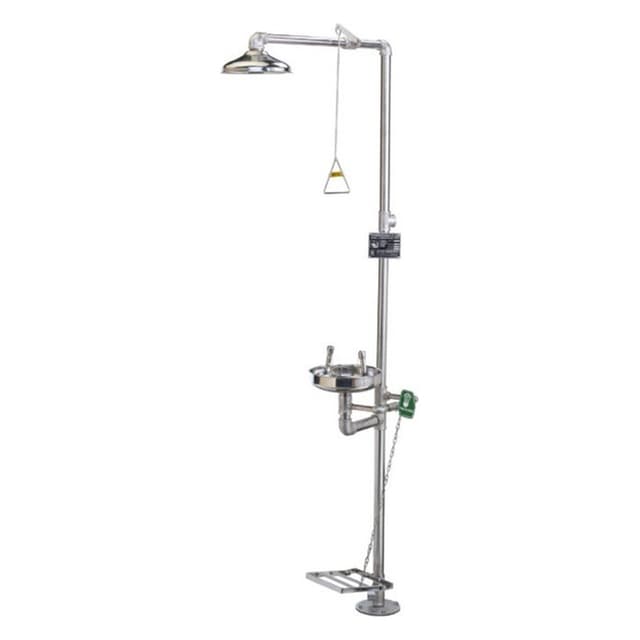
Safety Shower & Eye Wash Station – Stainless Steel
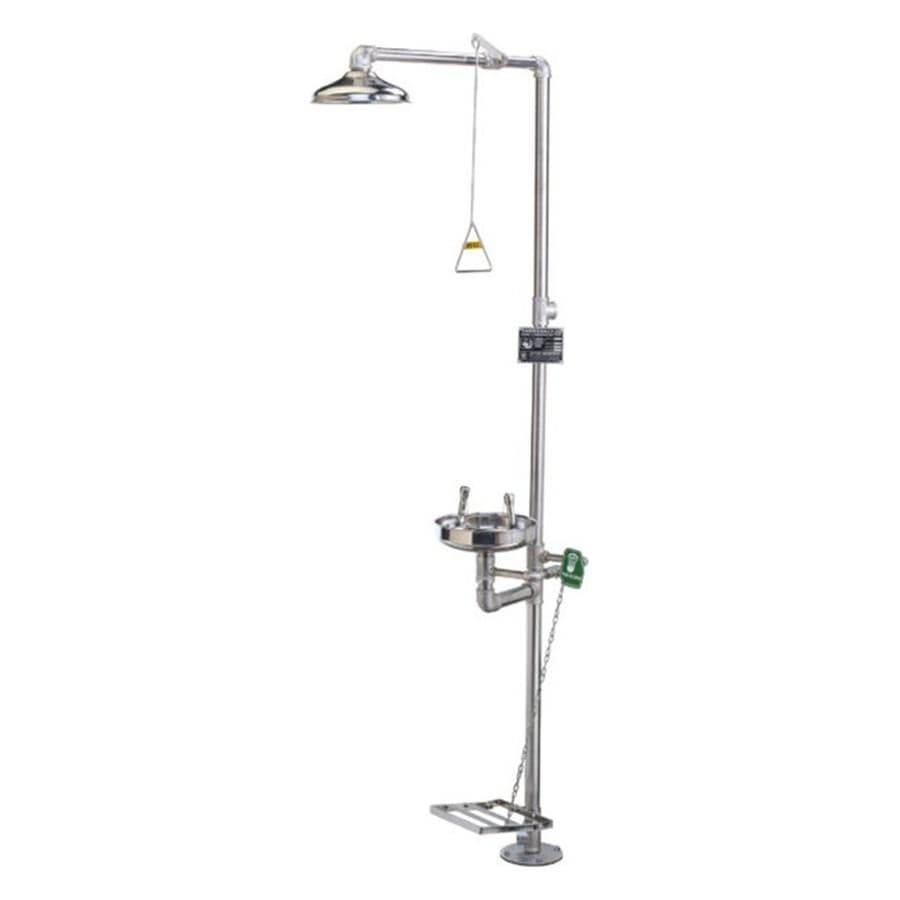
Stainless steel combination drench shower and eye wash station with push-plate and foot-pedal operated eye wash.
2 photos
View ProductEmergency Eye Wash
When a chemical or particle gets into the eyes, the first seconds matter most. Our eye wash stations and kits give workers immediate access to clean flushing fluid, whether your site has a plumbed water supply or not.
View AllBuilt to perform
Stations must be within 10 seconds of the hazard, on the same level, with a clear path.
One simple motion opens the flow and it stays on, leaving both hands free to hold the eyes open.
A gentle, continuous flow of tepid fluid for the full 15 minutes required by ANSI/ISEA Z358.1.
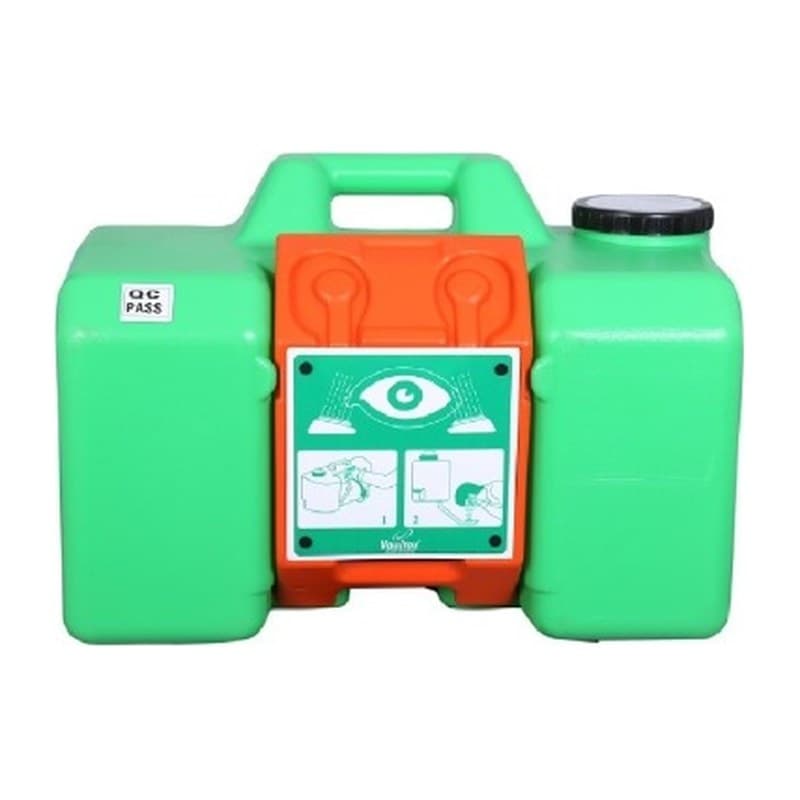
Our 34 liter gravity-fed tank delivers 15 minutes of continuous flushing with no plumbing. Pull the tray down and water flows immediately, which makes it ideal for construction sites, remote locations and warehouses.
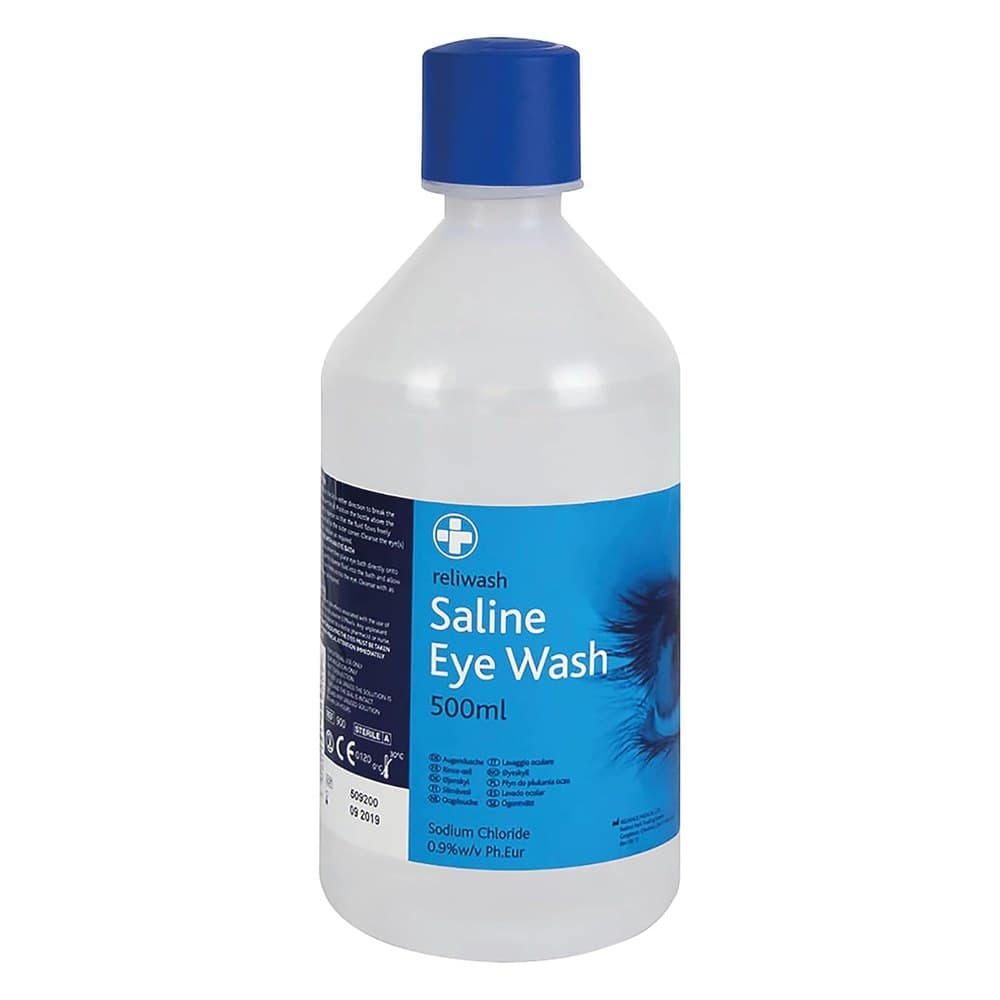
Wall-mounted saline eye wash kits let workers start rinsing straight away while they move to a full eye wash station or medical care.
Need help planning eye wash coverage for your site? Read our ANSI Z358.1 guide or ask our team.
ISD/6250 SS
Stainless steel combination drench shower and eye wash station with push-plate and foot-pedal operated eye wash.
2 photos
View ProductEGT
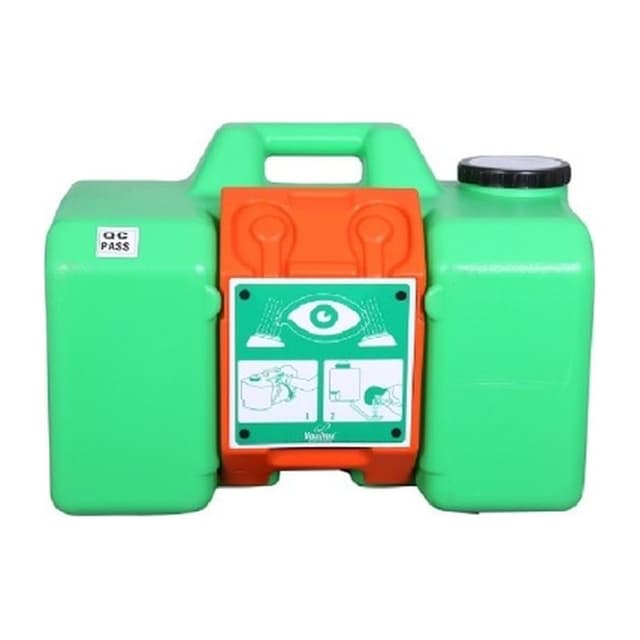
Self-contained 34 L eyewash tank that provides 15 minutes of continuous flushing where plumbed water is unavailable.
2 photos
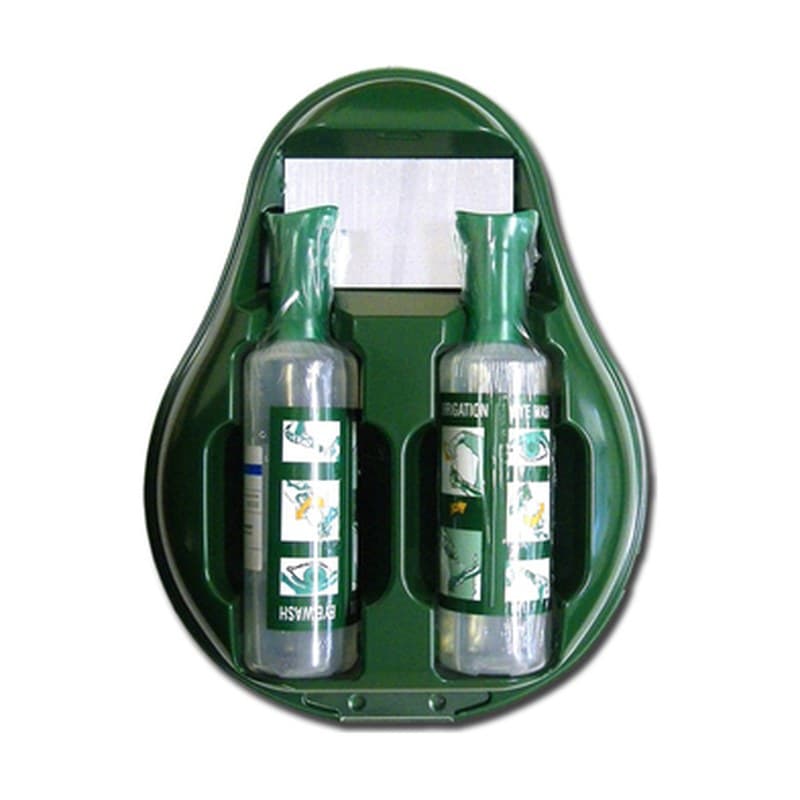
View ProductWall-mounted eye wash station with two 500 ml sterile saline bottles, integrated eye cups, a mirror and a clear dust cover.
View ProductSterile Reliwash saline eye wash in 500 ml and 250 ml bottles for flushing foreign debris from the eyes.
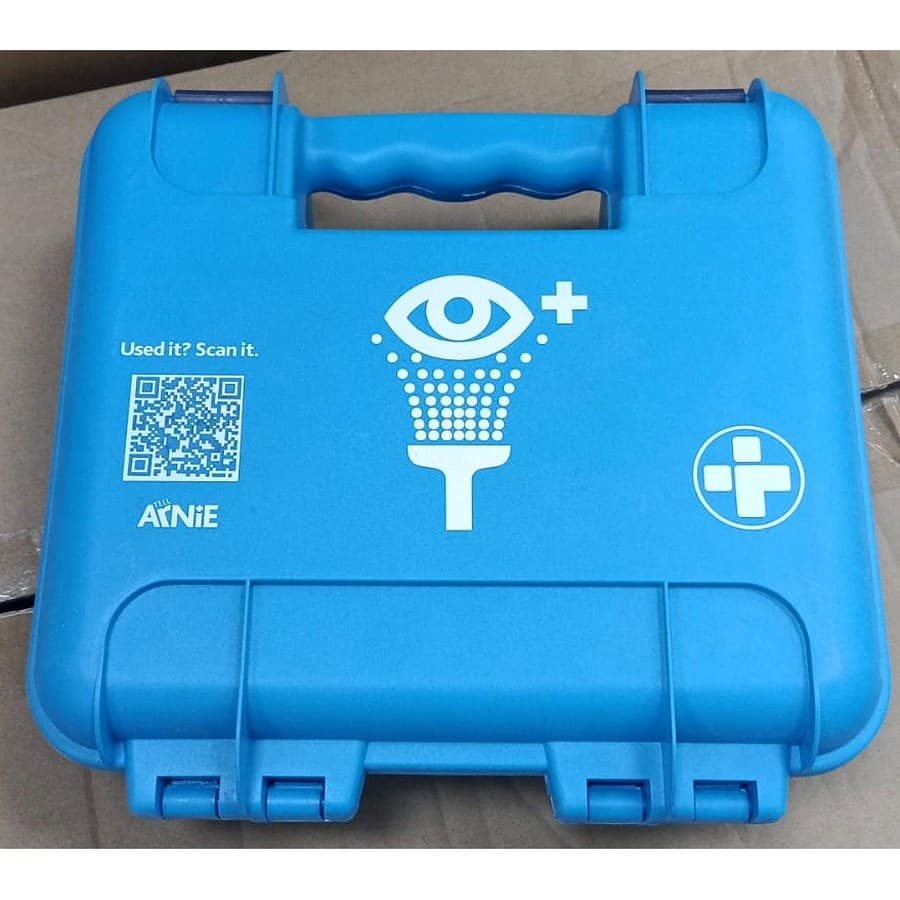
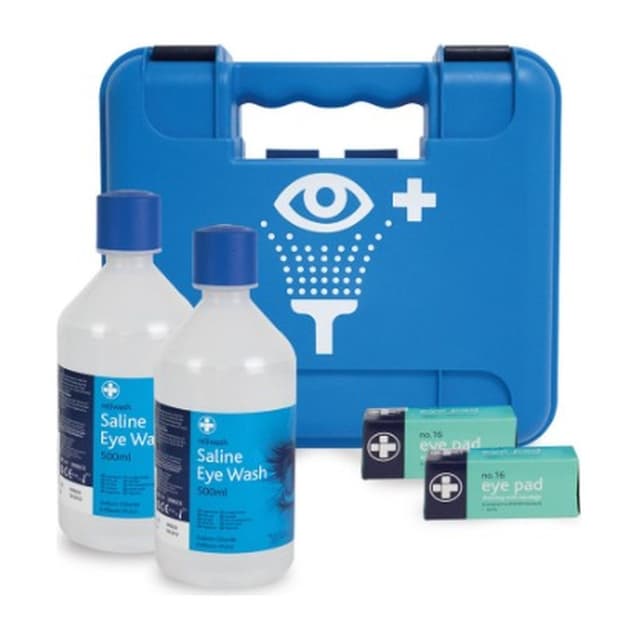
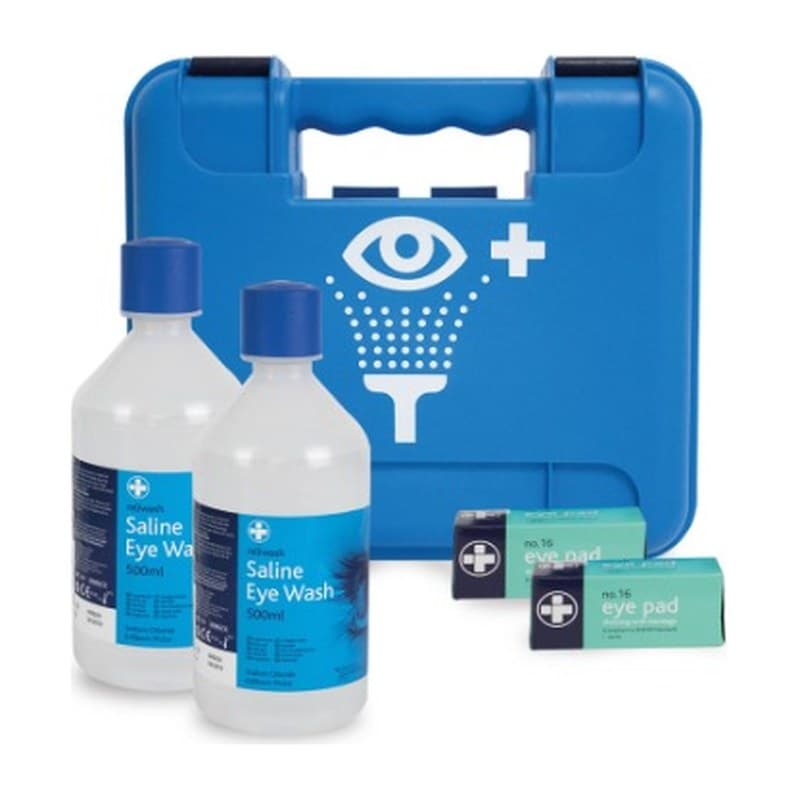
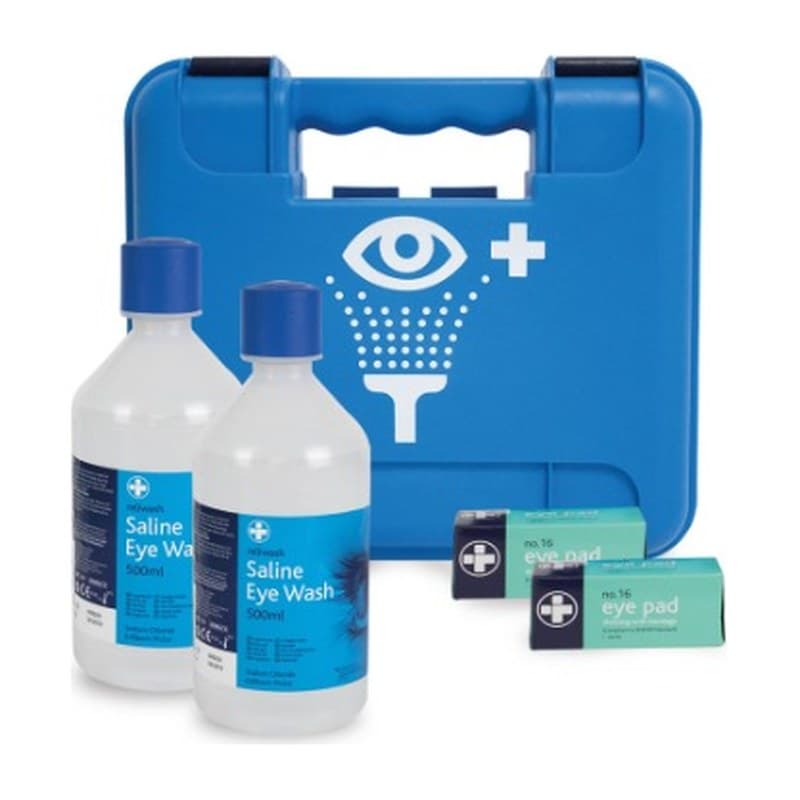
View ProductBlue carry case with two 500 ml Reliwash sterile saline bottles and two No.16 eye pad dressings.
3 photos
View ProductANSI/ISEA Z358.1 placement, flow, temperature and testing requirements in plain language.
Learn MoreOur team will review your hazards and recommend where eye wash equipment is needed.
Learn MoreAn eye wash station flushes only the eyes and delivers at least 1.5 L/min (0.4 GPM). An eye/face wash station has larger spray heads that flush the eyes and face together at a minimum of 11.4 L/min (3.0 GPM), which is recommended where splashes may reach the whole face.
Use a self-contained gravity-fed unit such as the EGT 34 L tank wherever a plumbed potable water supply is not available, for example on construction sites, remote locations, temporary work areas and warehouses. It still provides a continuous 15-minute flush.
Saline bottles and kits are first-response equipment. They let a worker begin rinsing immediately at the point of risk, but they do not replace a station that provides a full 15-minute flush. Use them alongside a plumbed or gravity-fed eye wash station.
ANSI/ISEA Z358.1 requires the unit to be reachable in 10 seconds or less, roughly 16–17 metres, on the same level as the hazard and with an unobstructed path. For strong acids or caustics it should be immediately next to the hazard.
Flushing fluid should be tepid, generally 16–38°C. In the UAE, Saudi Arabia and Qatar, keep portable tanks indoors or shaded, insulate and shade supply lines to plumbed stations, and refill or replace fluid on a regular schedule.
Plumbed units should be activated weekly to flush the line. Self-contained units should be inspected regularly and their fluid changed according to the manufacturer's instructions, and every unit should be inspected annually.